

March 2026 report
We have to be quick

No time for intros, March:

The Man without Qualities (Volume I) by Robert Musil
I was in no rush to finish this until the very end of the month, 90% read on the treadmill, don’t know if that improved or detracted from my experience. My feelings are virtually the same as in February (i.e., positive), though the latter third of Volume I felt like it dragged more than the first two-thirds or so.
Anyway, there’s still Volume II…
Butterfly Valley by Inger Christensen
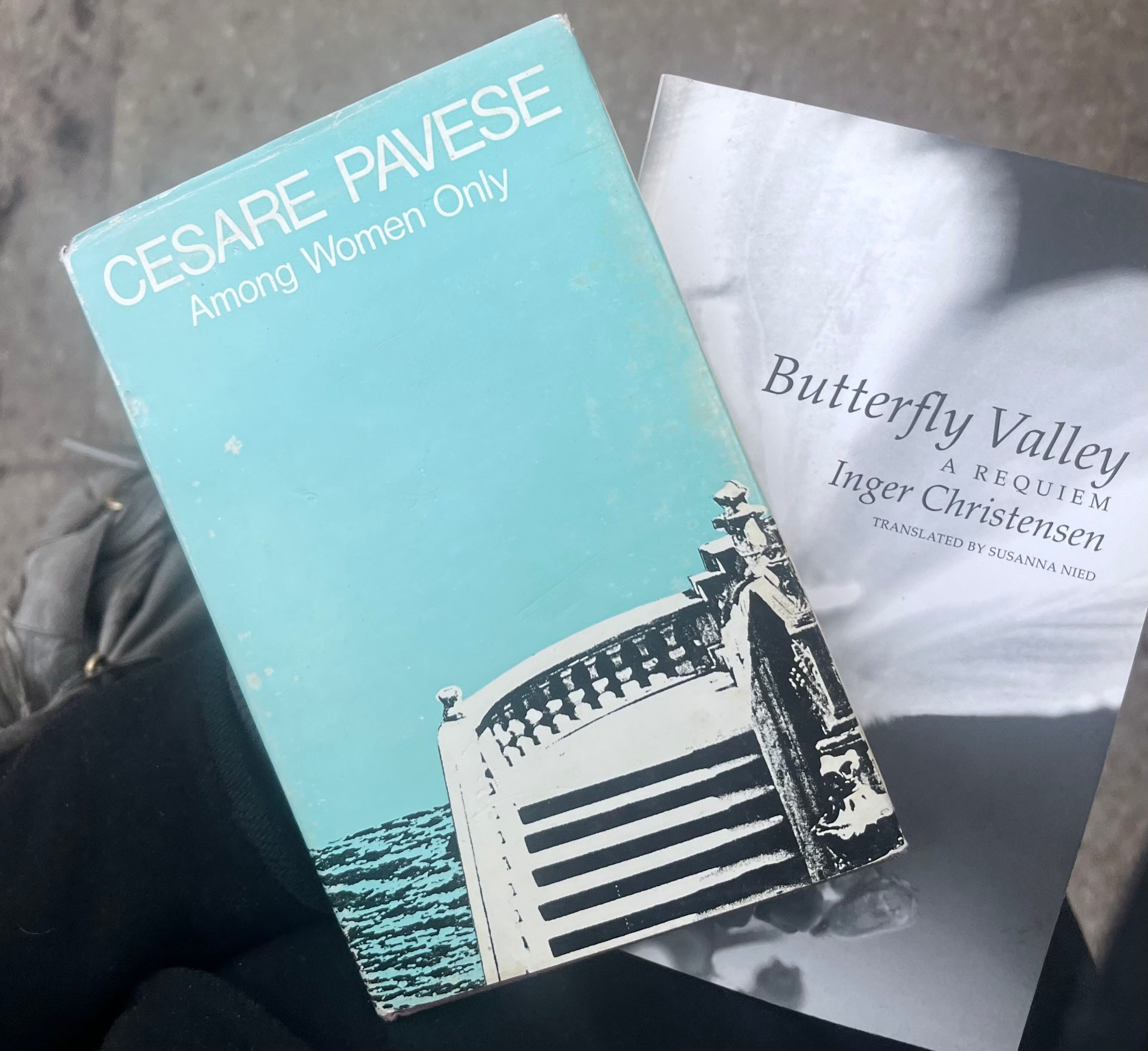
Came across this book on an immaculate hungover Saturday, damp, grey, first warmth (=14 degrees) of the year… took the bus to the other side of town and serendipitously wandered into a one-day book fair where I found a couple pearls, Butterfly Valley and Among Women Only.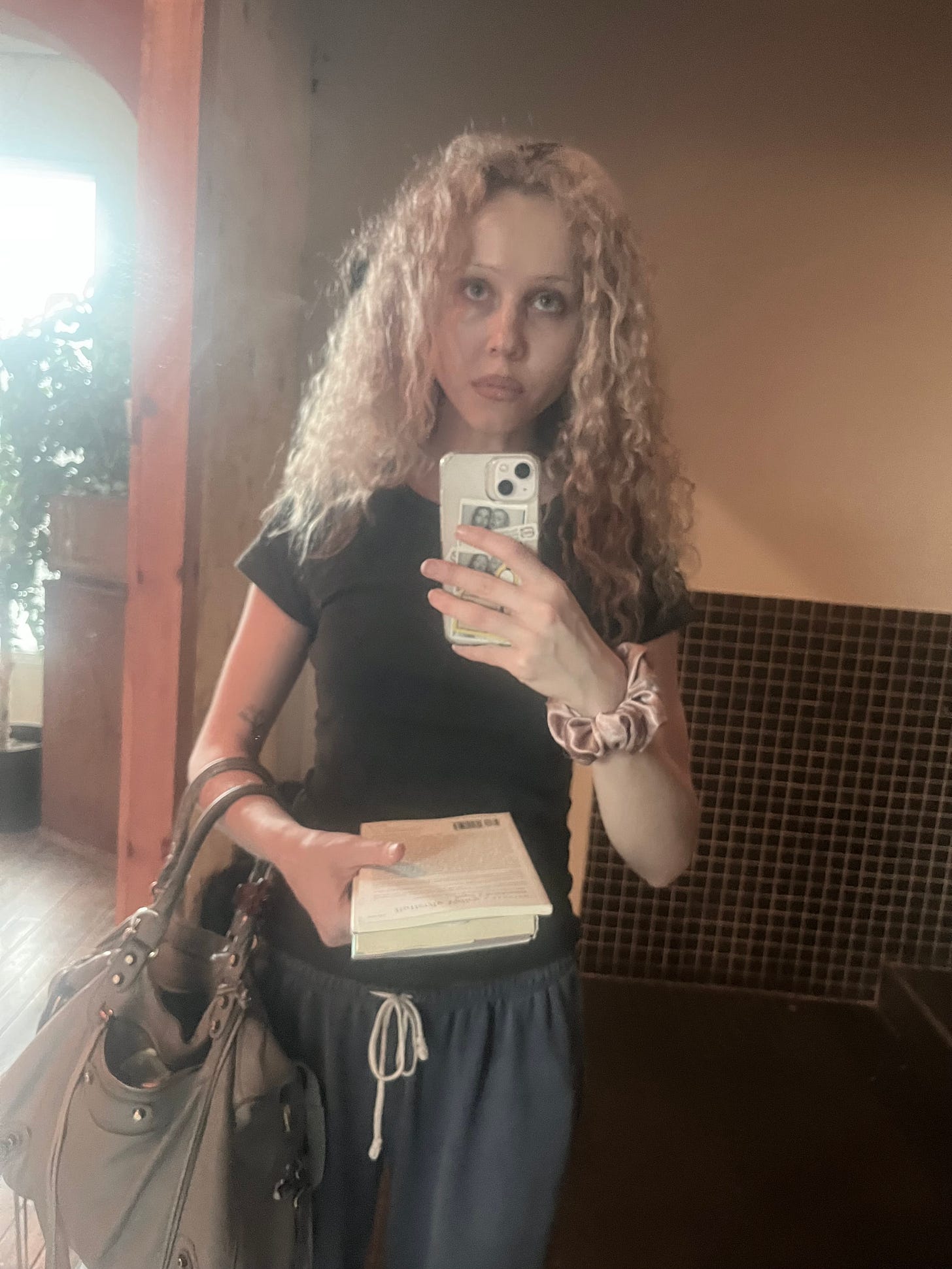
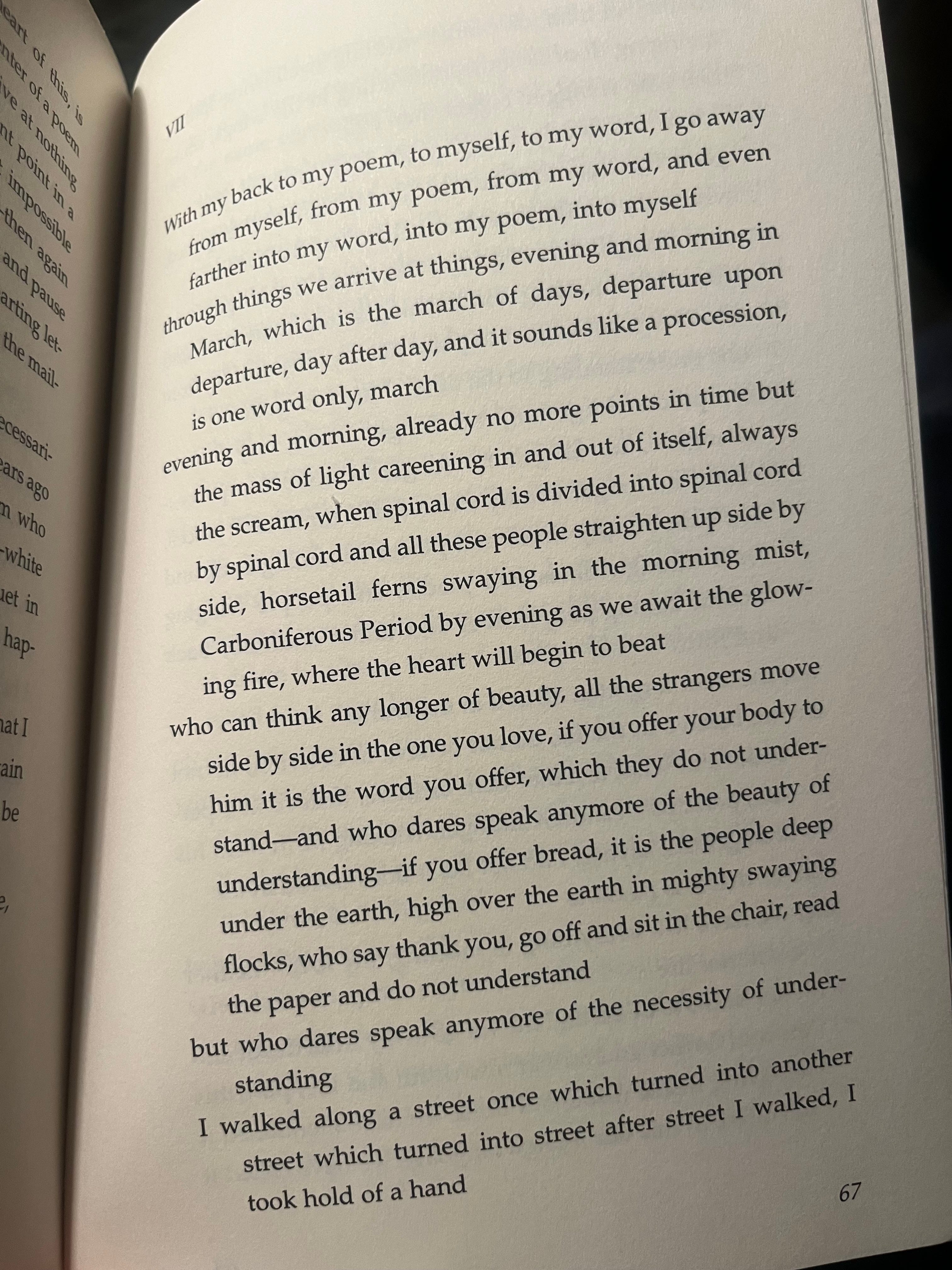
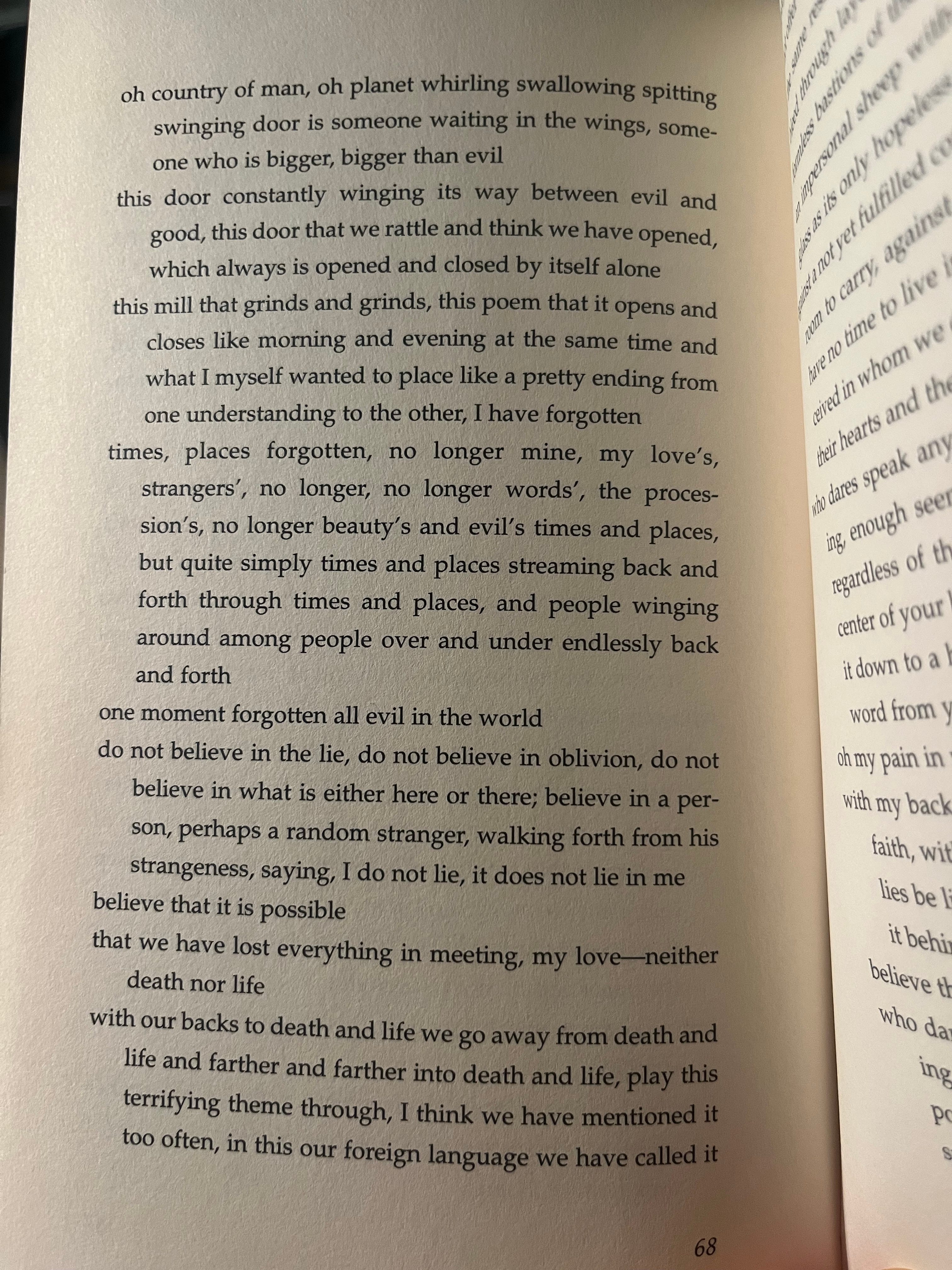
Lights on no one home flow state I think I actually read some of the poem sequences in here once, back in Texas. The first, eponymous section of the book is a run of sonnets, very masterfully constructed, shows Christensen’s (and her translator, Susanna Nied’s) formal precision. Nice to read some verse that is Not Free. Intricate and balanced as a butterfly, extensive and expansive as a valley, to be sure… didn’t love the second set of poems (“Watersteps”), and the third, “Poem on Death,” wasn’t especially memorable to me (or maybe the translation here made it sound a bit trite?). The last sequence, “Meeting” (excerpted below) I am fond of. This is the one I remember reading in the past. Christensen utilizes repetition so poignantly, and these final poems mention March several times, a coincidence of text and reading I’m always happy for
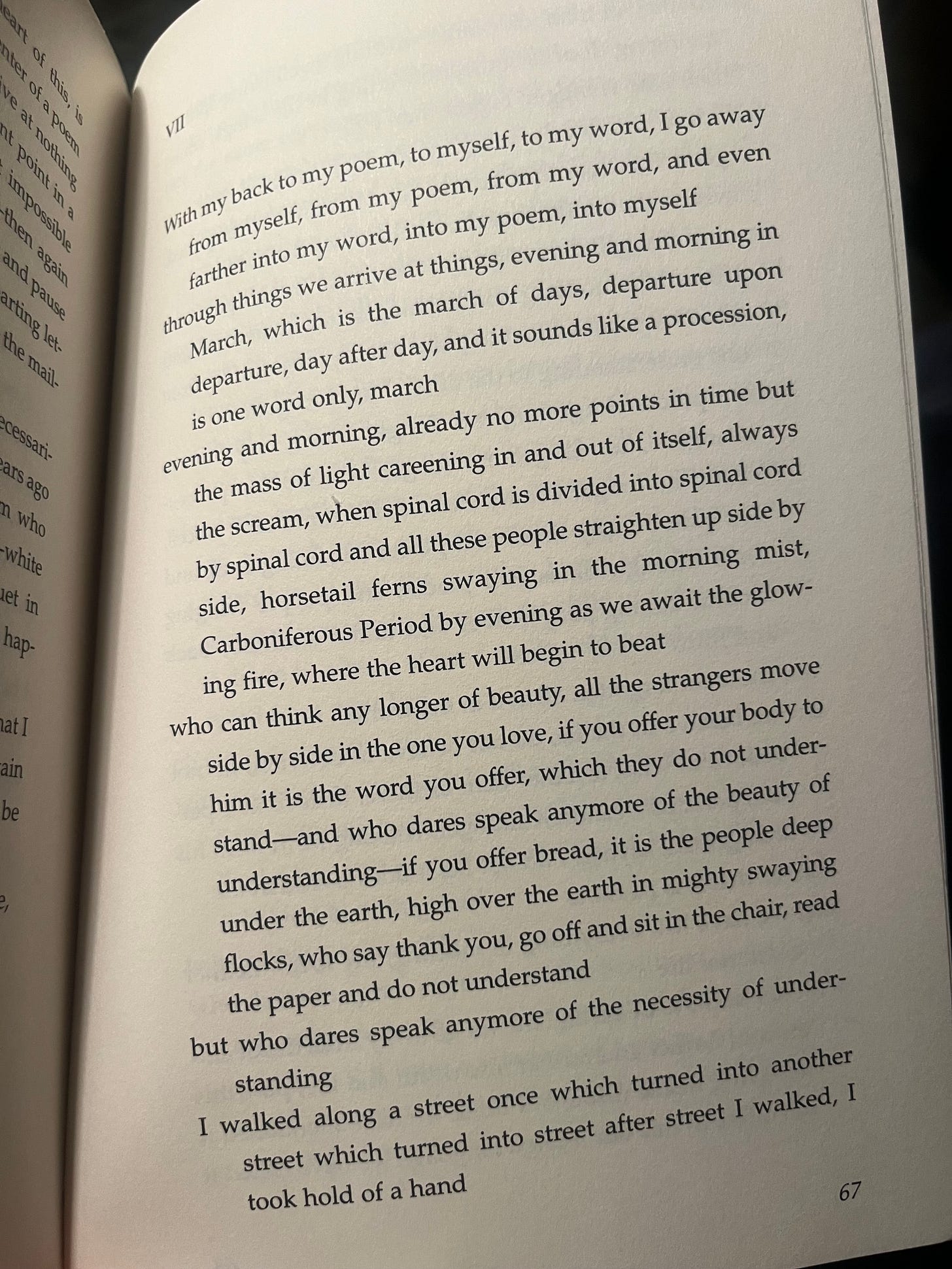
who dares speak anymore of the beauty of understanding […] but who dares speak anymore of the necessity of understanding 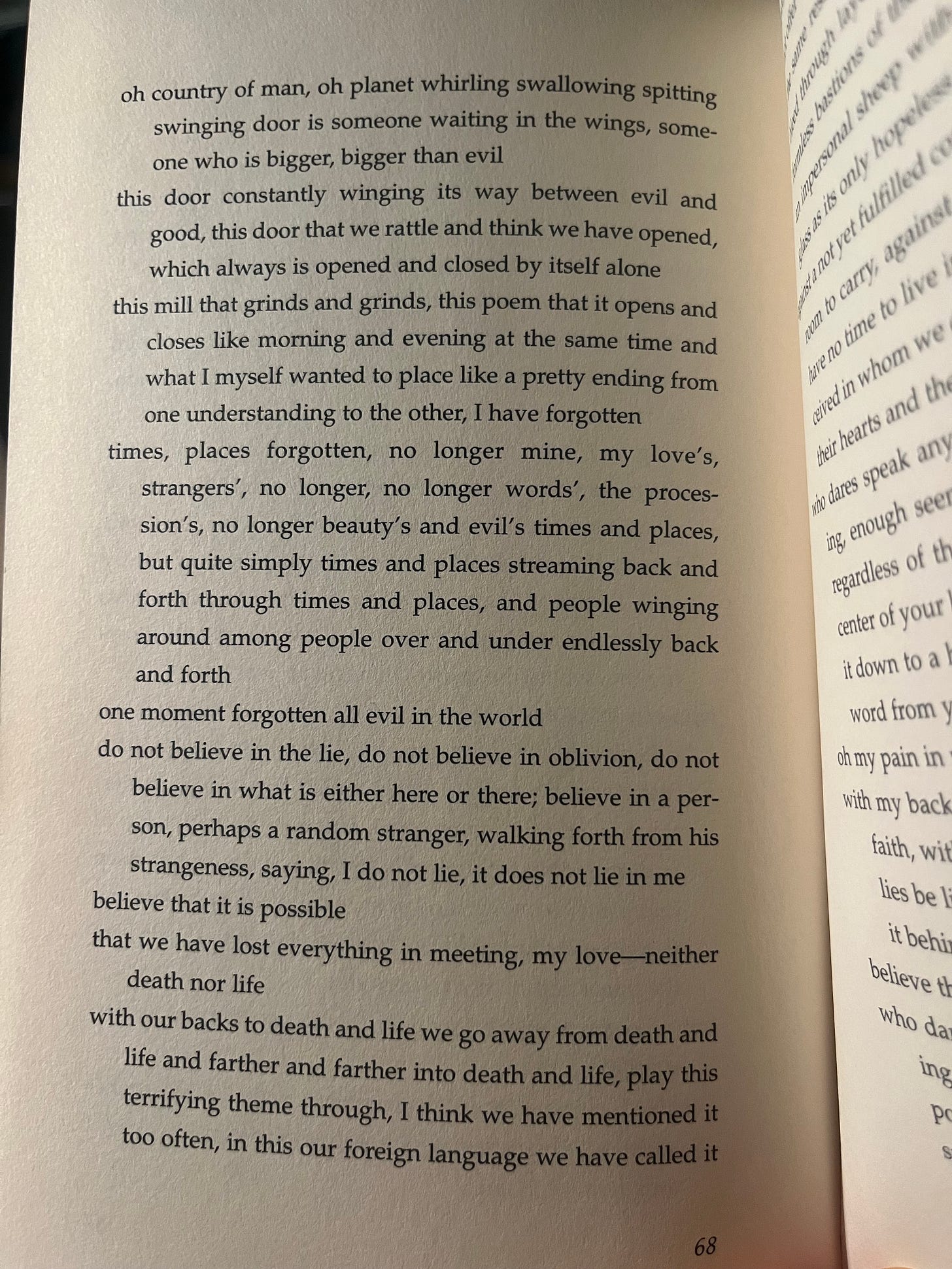
Yes I have forgotten Aug. 9 – Fog by Kathryn Scanlan
Picked this up to at work because it was short, though within the first few pages I thought it might actually be too scant for my tastes, lots of white space, I’m not obsessed with things that lean too conceptual sometimes (…) but maybe it’s not so serious…
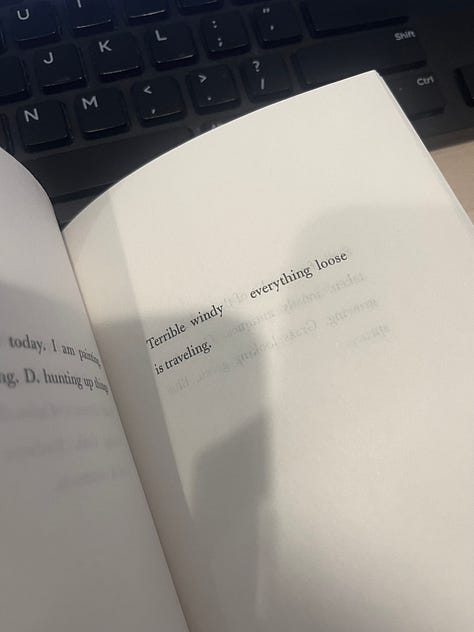
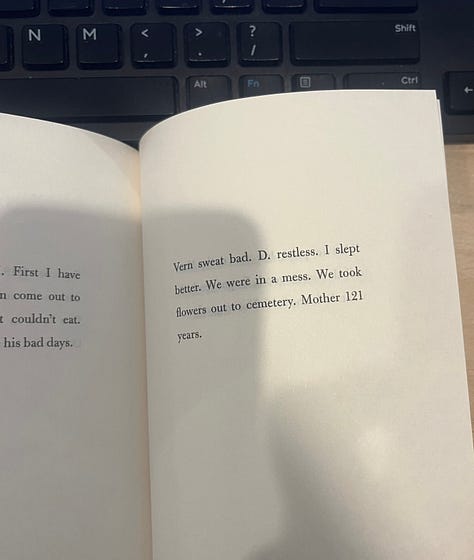
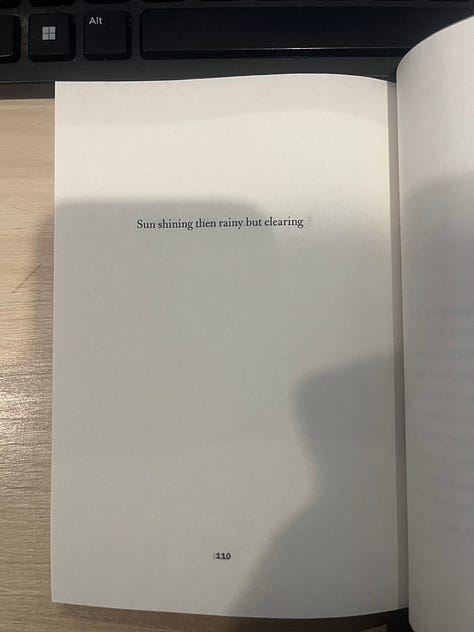
The book is composed like a diary throughout the seasons, clearly the product of a culling process, a whole year filtered into these sparse selections. It’s (sort of) interesting to consider what one would choose from a much larger aggregate of material to make into a book of this scale. There’s a tone of both sensitivity and pragmatism; it gradually becomes evident that this is a story, among other things, about illness and caretaking (to which sensitivity and pragmatism are equally fitting), not merely seasons but a season of life. Likewise the brevity of the entries is perhaps appropriate to or representative of how one experiences, witnesses, documents infirmity
These were my initial impressions. Then, at the end, there was an author’s note explaining the book’s origins that quite surprised me. Maybe I won’t disclose it here, though I think as little as looking up Aug. 9 – Fog online gives it away. Ngl I don’t know that this premise I’m for some reason not revealing makes the work better to me, or actually worse... imo it makes the project more compelling but at the same time more of a cope
The Stepdaughter by Caroline Blackwood
Hiji, if you’re reading this I meant to send you a voice note about this book, not only because the introduction mentions the Hotel des Artistes… read this completely randomly and very glad, like, I’m laughing recalling it; an epistolary novel, however, the letters are not written but instead rattled off in the mind of the narrator, J, to no one in particular (Dear So and So). J is a housewife in her thirties whose husband, Arnold, has abandoned her in their swish Upper West Side apartment for some jeune fille in France. But this is not the sole source of J’s misery. No: Arnold has left J with his daughter – her stepdaughter, The Stepdaughter – Renata, a morbidly obese, borderline mute teenager, whose pitiful nature inspires inexhaustible frustration, even fury, in J.

At first the book might simply seem funny, absurd. Then merciless. Then it becomes evermore complex; shows wonderful development. Really a story about two women trapped (or four, if you count the French maid, Monique, and J’s own infant daughter), about resentment and projection and mistaking the object of your violence… this is why I need the psychoanalysts in here
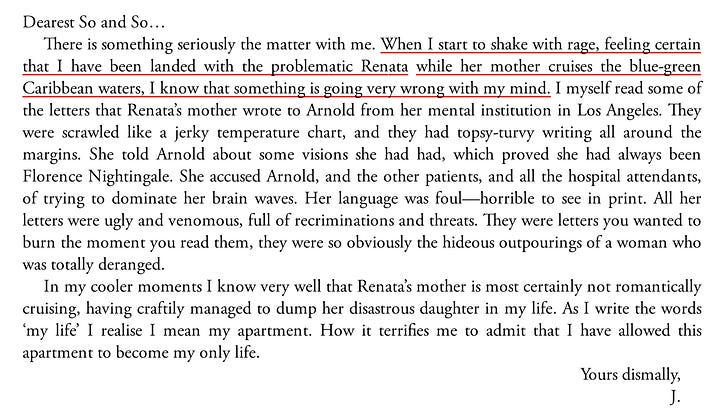
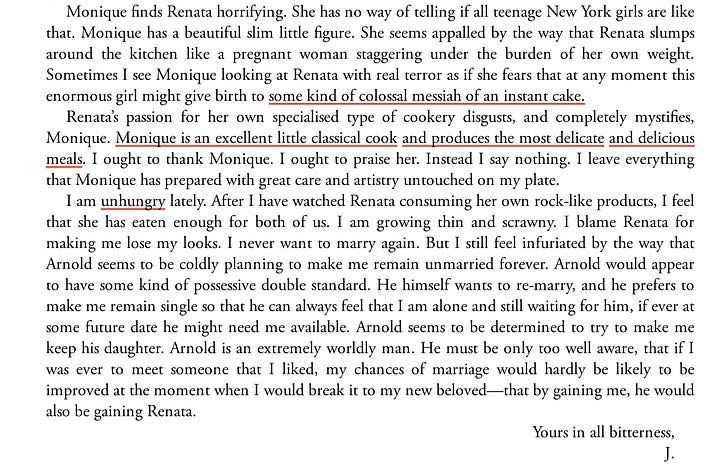
Semi random examples of J's letters Anyway, I found this superbly enjoyable and I look forward to reading more by Lady Caroline Blackwood, who was a character herself (English socialite, married to Lucian Freud and Robert Lowell, among more legitimate accomplishments…)
Baby, I Don’t Care by Chelsey Minnis
So good, with collections of poetry (also short fiction) I’m increasingly concerned that the pieces together feel like a complete work, seems like a low bar yet too often not the case... loved Baby, I Don’t Care for its parts and also as a successful whole. Perhaps not a huge demand because the form is relatively simple and consistent throughout
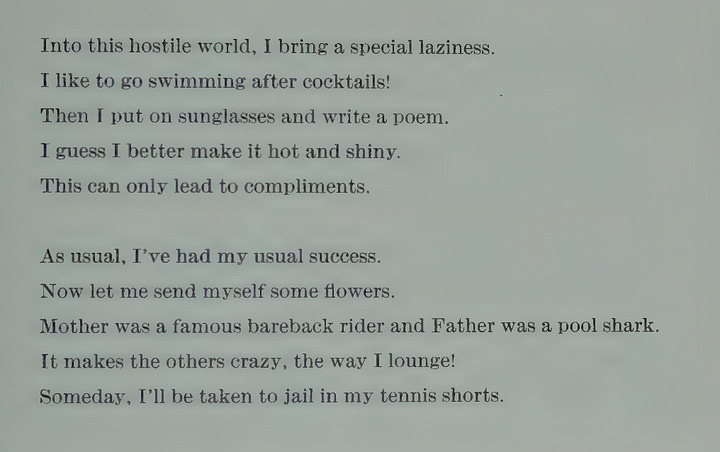
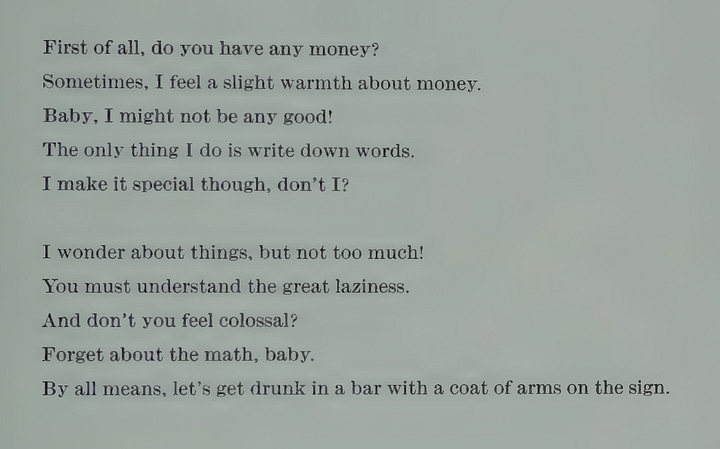
"Laziness" Something I enjoy about Minnis is her repurposing of these kind of formulaic, dull phrases, colloquialisms, clichés, idioms, whatever... it’s, like, so genius and amazing, I’m genuinely awestruck when I read her. I also like that she quit the ellipses for this book. You have to switch up on yourself
Among Women Only by Cesar Pavese
My other find at the book fair... I have been meaning to read this for so long. Such a pretty edition, and you know exactly in the narrative when the characters arrive at the setting pictured on the dust jacket, made me smile, as up until then I’d been thinking the sea was not quite accurate to Turin…
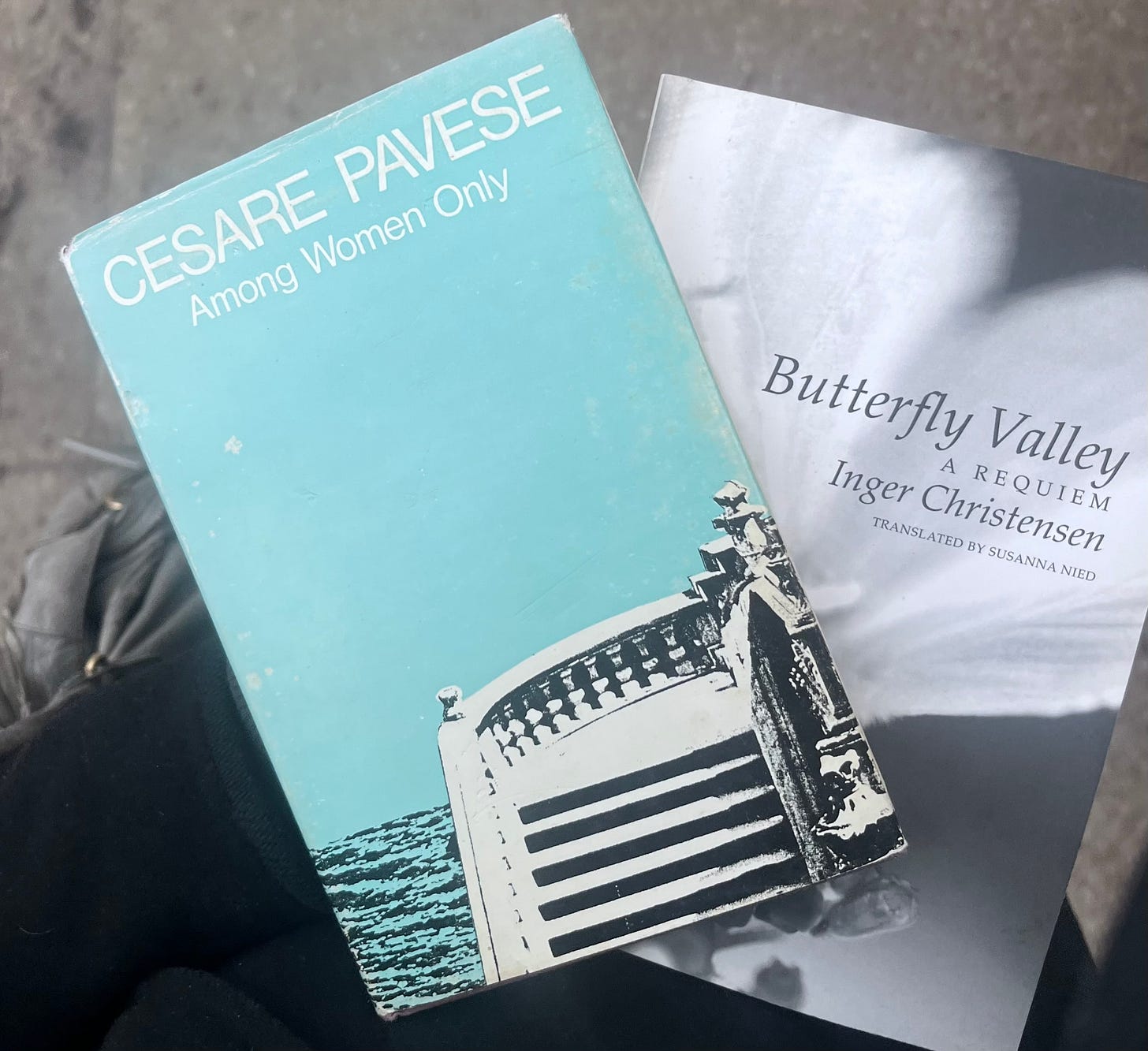
Among Women Only begins from the point of a young girl’s suicide and follows frivolities and banalities of her social circle. All of this comes through the eyes of the older (i.e., 34-year-old) Clelia, who has moved back to her hometown of Turin post WWII to open a boutique… I like the talk of shop windows, couturiers, etc. Lamentably I find myself getting tangled up in Pavese’s biography and continue to linger on the fact that he left this book as his last work, killing himself about a month after its publication, I believe... I say this less because the novel features suicide among its general themes of dissatisfaction, alienation, et al., and more because Pavese uses the conditions of women and girls to emphasize these states, which is interesting to me. He writes both men and women well, gender difference well. Great names: Clelia, Momina, Nènè…
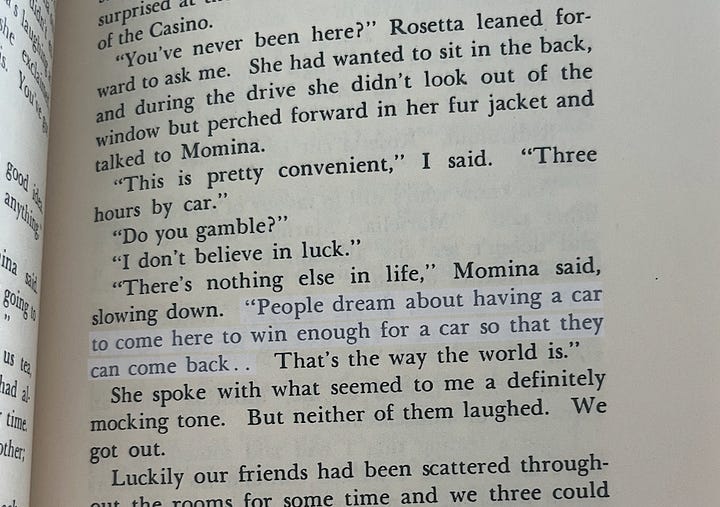
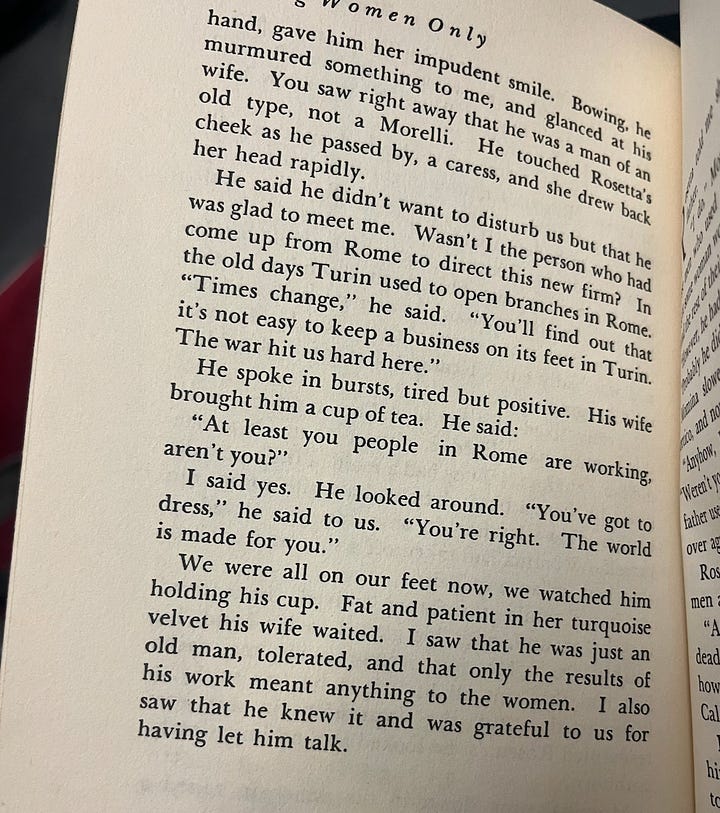
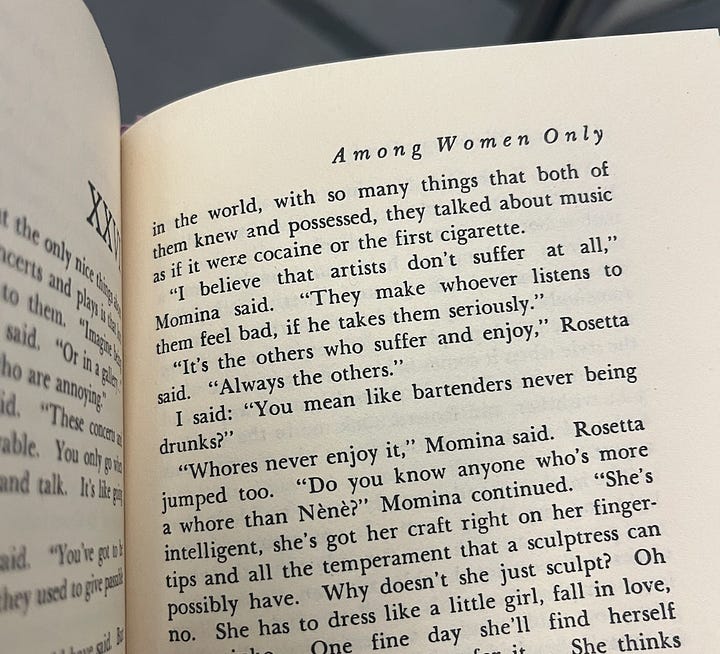
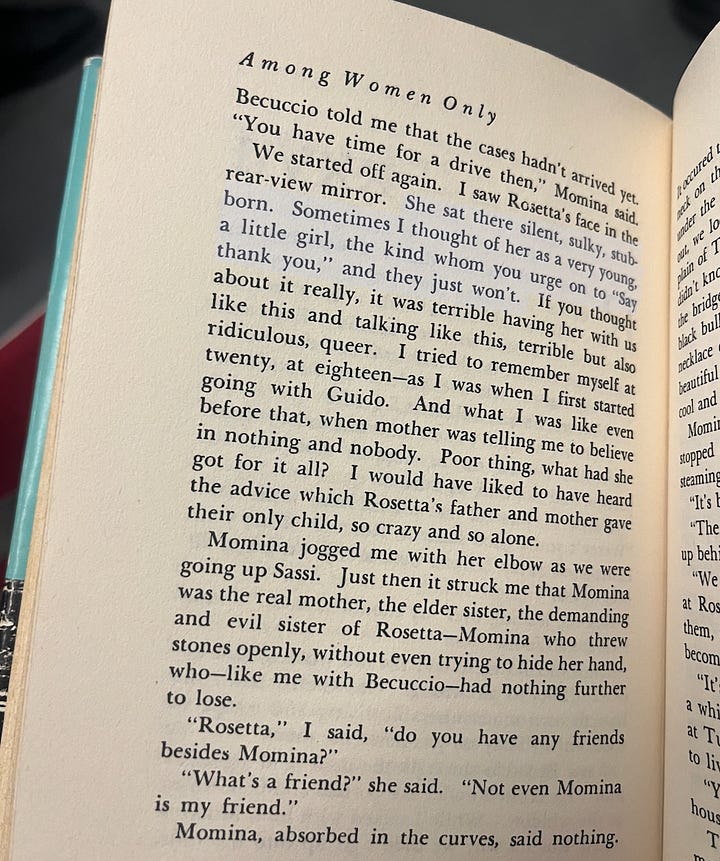
Too many pictures, I know “The world is beautiful,” Momina said […] “If only we weren’t in it.”
You get what you want, but only after you have no more need for it
Yeah… have been skimming Pavese’s diaries since
Practicalities by Marguerite Duras
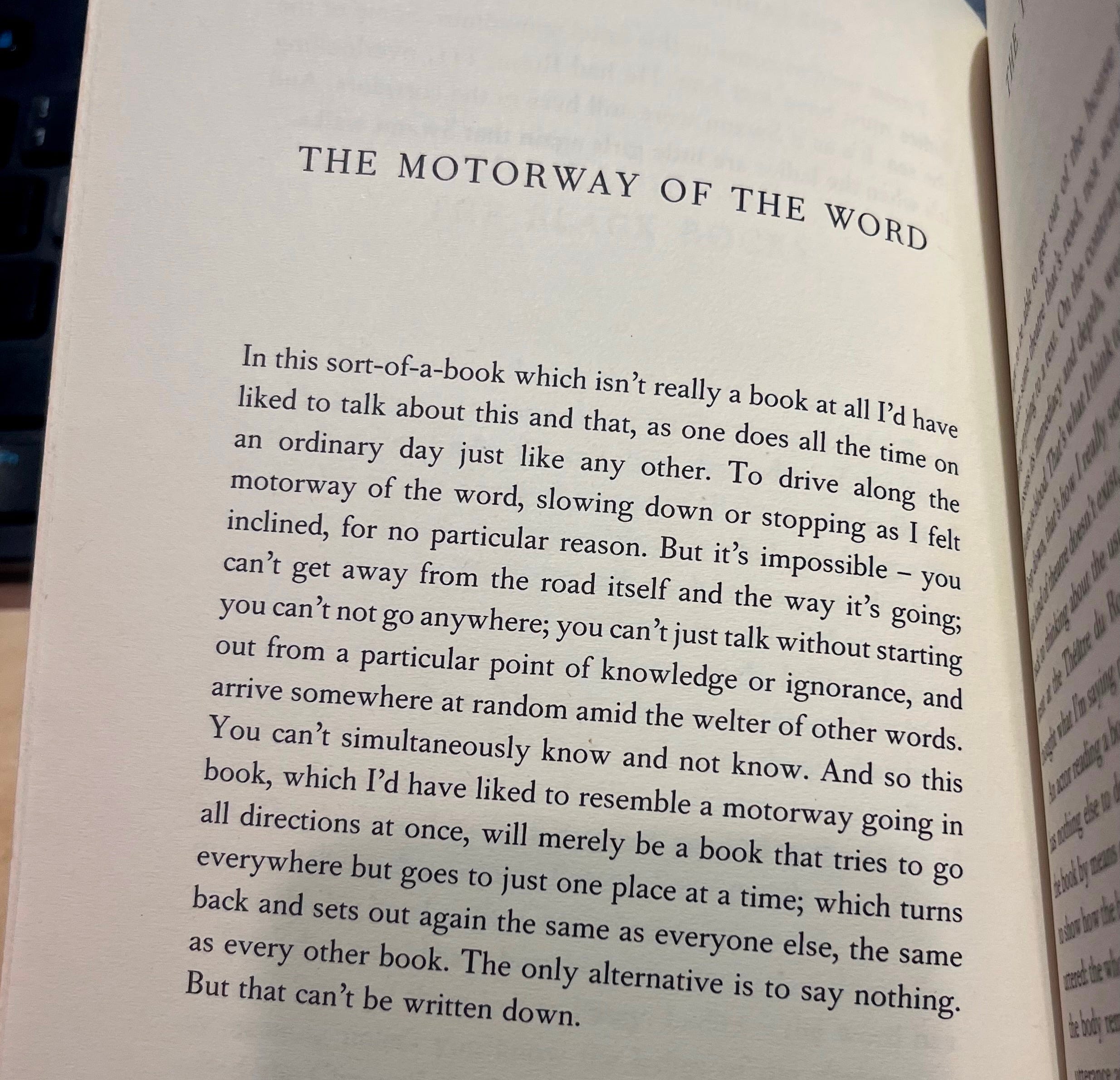
No one does it like Duras, like, it’s so old and never gets old at the same time, overdramatic and matter-of-fact, so her but also too true to life at large, makes me laugh. Practicalities consists of Duras’ reflections on various topics, transcribed from conversation and then edited into relatively brief pieces.
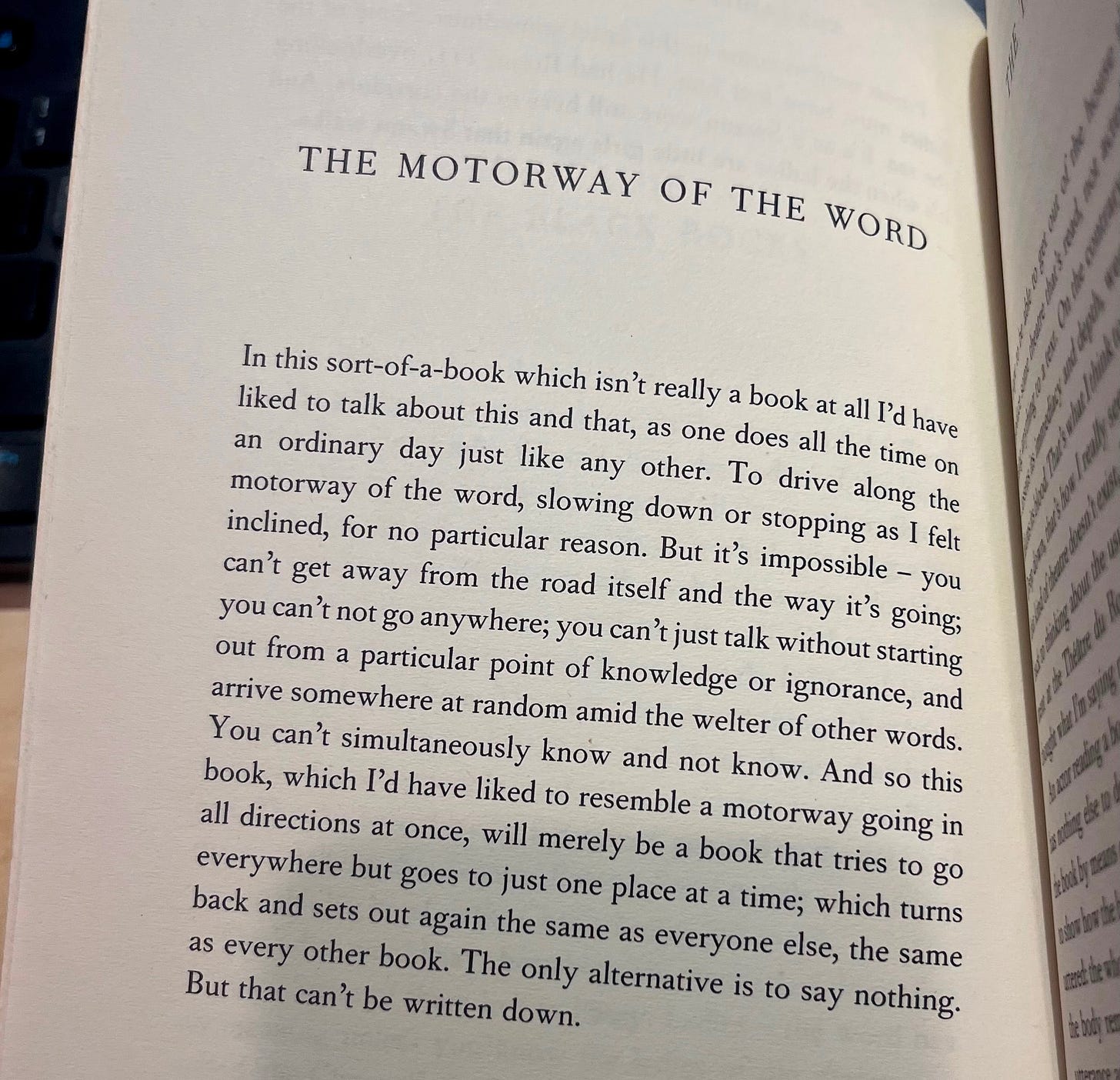
Me telling a story The longest of these and the centrepiece, “House and Home,” is really excellent, a stronger, more nuanced and more beautiful discussion of gender relations than the entry simply titled “Men,” though that one is funny… (I feel like I have a particular strand of I Will invent a New Feminism running though this month)… I also really like the entry on alcohol/her alcoholism
Lots of impeccable little quips but as I get to the end of these posts I can’t bear to go take more pictures unless I start paywalling some of this shit…
Just kidding but you know
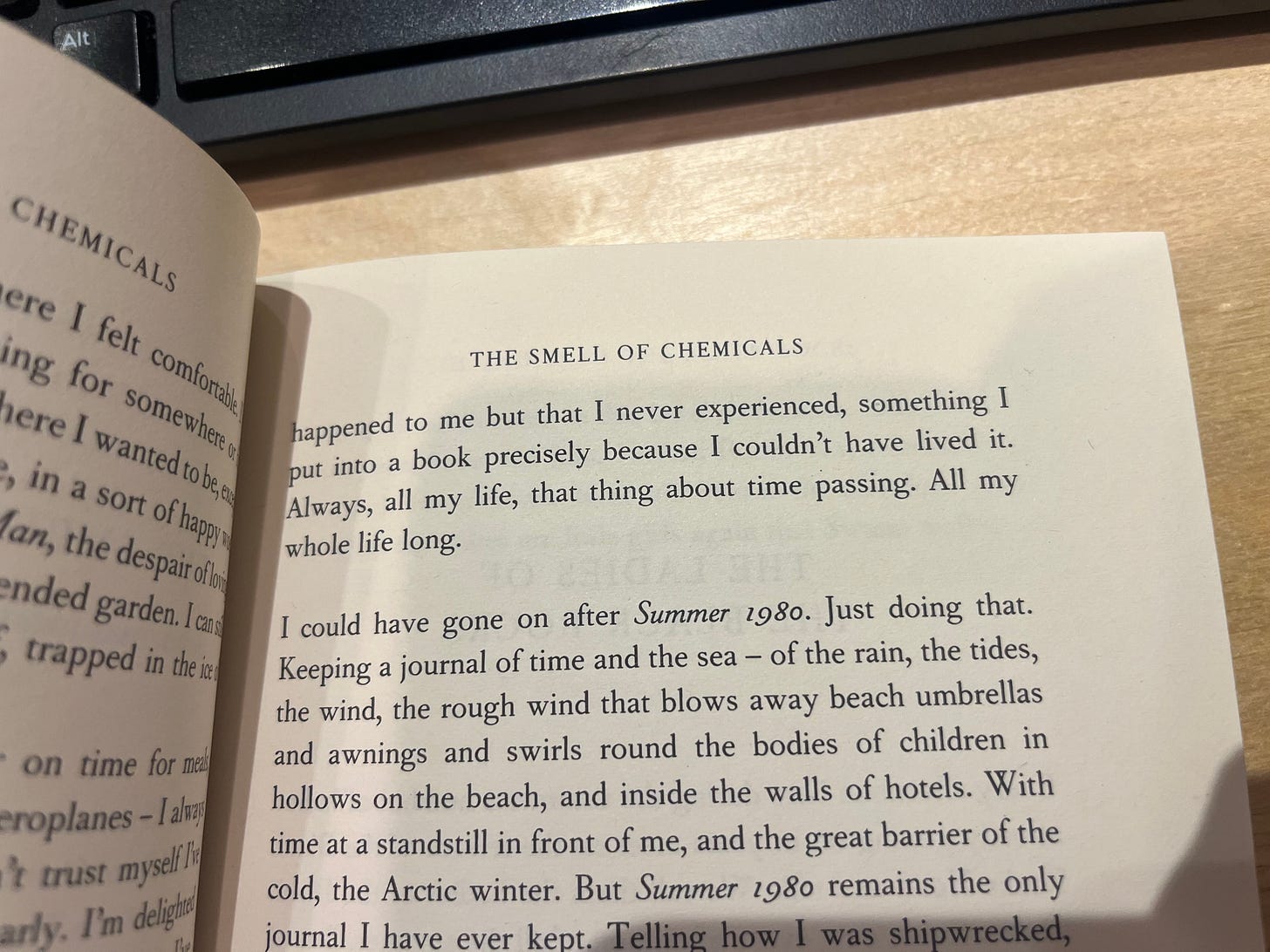
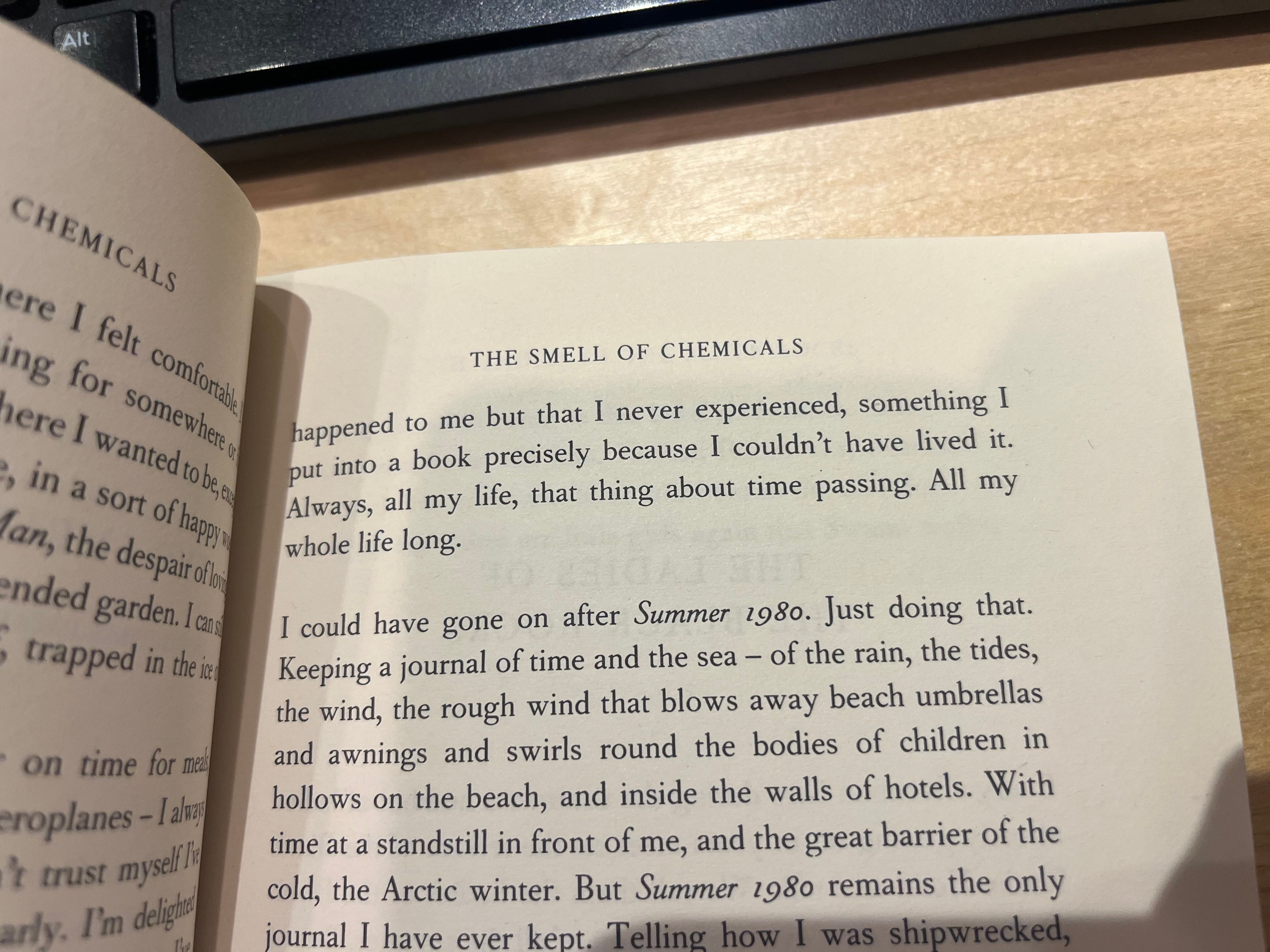
Always all my life that thing about time passing All my whole life long
Recommend easy to flip through worth your time
March Book by Jesse Ball
Had never read Jesse Ball’s poetry, only some of his short prose. I thought the poems were very good. Ball was an MFA candidate at Columbia (26 years old) when this was published and there is something that feels precocious, kind of chosen, about the writing. Not, like, pretentious or contrived (I mean, not more than all poetry is contrived); more like if precocity = percipience that is simultaneously precluded in a very basic way by circumstance, or the physical fact of being too young, inexperienced. Perhaps it’s just that Jesse Ball kind of looks and talks in this strange augur type way. Maybe someone knows what I mean. Felt kind of like folklore. Sometimes there was density enough that I thought the book could've been shorter, actually. Some poems randomly reminded me of Louise Glück, but maybe I’m just seeing what I like. Enjoyed the more prosey section at the end.








Potential Reads
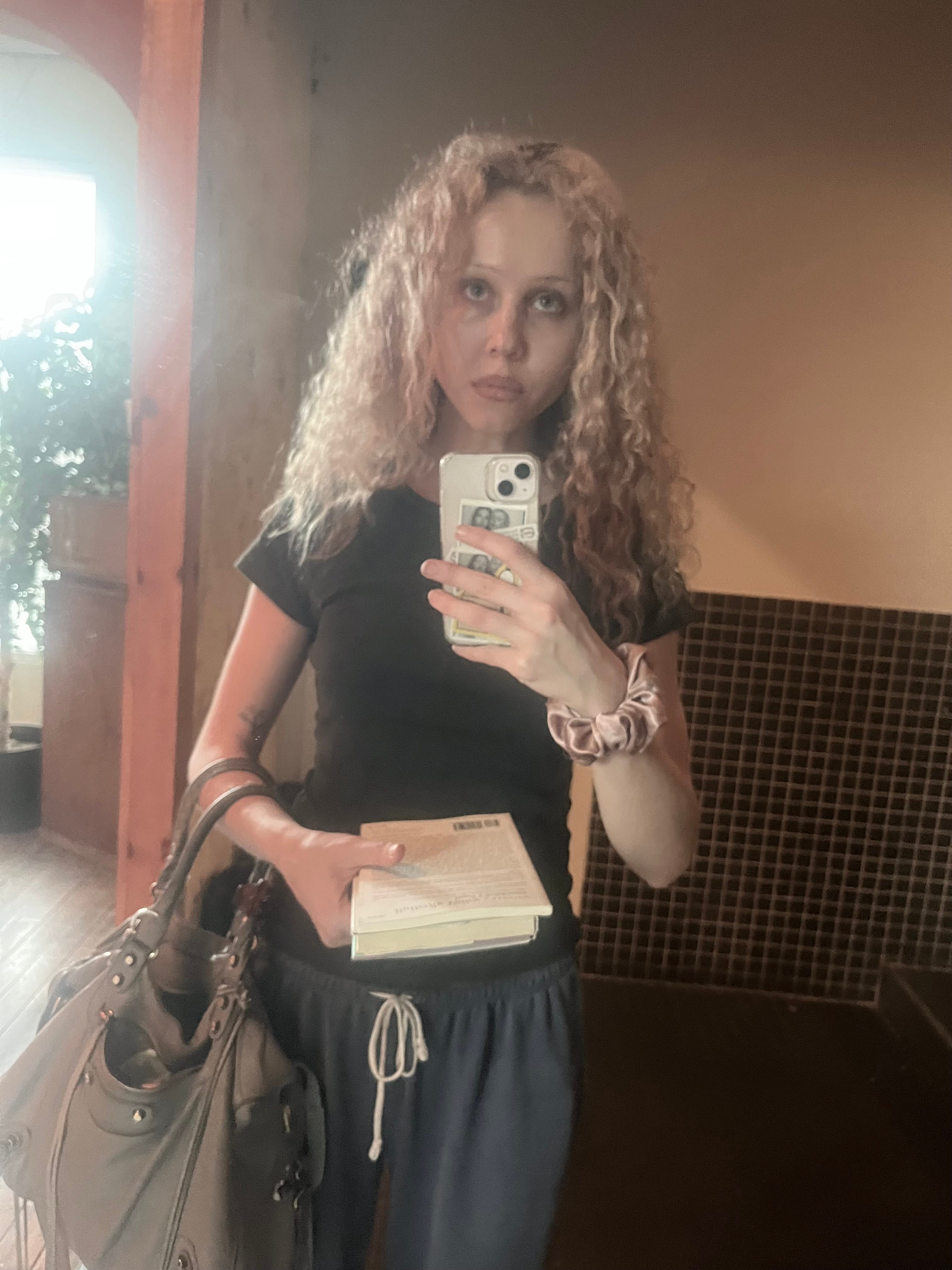
I got a good haul during a random other excursion to an area of the city I’d never visited, did not expect to happen upon a good secondhand bookstore and leave with nine... Bought a minuit edition of Duras’ Moderato Cantabile, which I’ve read quite a few times in English so I figure I should be capable of reading it in the original French. Also, a Christa Wolf, The Quest for Christa T., some Brecht, some Woody Allen, some old Anne Carson
Of course, the new Nancy Lemann and Chelsey Minnis
There’s other stuff but I forget. Probably it’ll turn out to be exclusively other stuff.
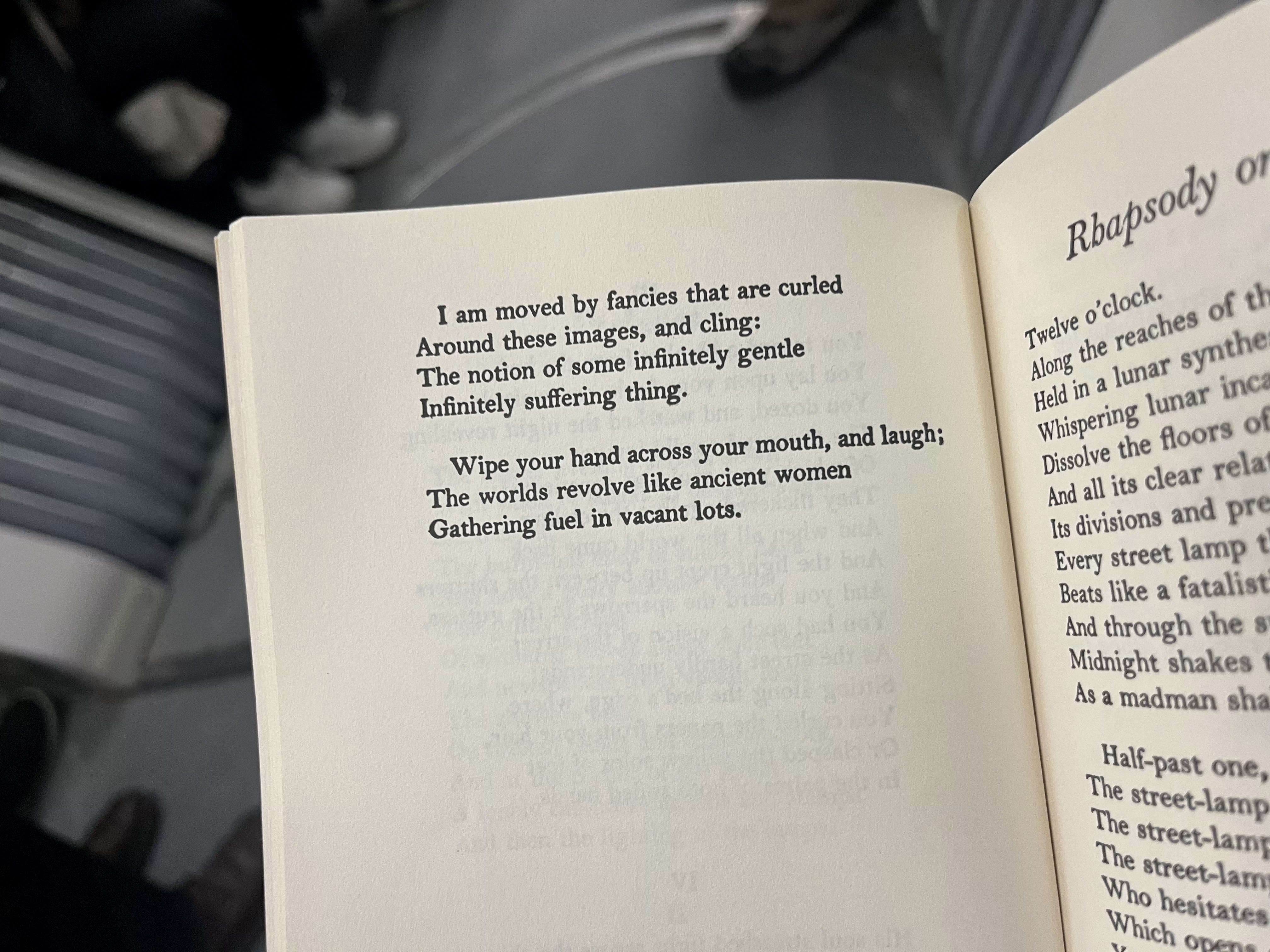
Last, though, closest to the heart: tradition that me and Olivia read The Waste Land aloud this time of year; I guess it’ll be over the phone. No opening lines like April is the cruellest month, breeding / Lilacs out of the dead land, mixing / Memory and desire, stirring / Dull roots with spring rain… tearing up in 3, 2, … bye
Pathological Random

I think that’s all I can give to you…
Peace:
PR